News and Announcements
News & Announcements
Technical Insights Series Article 1 - Structural Considerations When Designing a Power Plant
INTRODUCTION
The construction of power plants is one of the most demanding areas in the building industry. Heavy and bulky equipment, numerous systems interacting sensitively with respect to vibration, high temperatures, numerous connections of piping systems, and the need for interaction with other components of power plants with high reliability of operation, as opposed to normal commercial buildings, around the clock for long periods of time and with high safety, service life, and maintenance capabilities.
The same considerations and higher standards apply to the design of other critical facilities such as hospitals, emergency response facilities, data centers, etc. These are structures that must function in the event of a strong earthquake, a typhoon, a severe flood, etc., and must provide life safety and business continuity. In addition to supporting their loads in a safe and durable manner for their design service life, the structural system must also support other considerations including thermal effects, vibration, earthquake forces, wind, etc., as well as the effects of the sequence of construction and future modifications and additions to the process or plant operations. As with the design of power plants, early coordination between the structural, mechanical, electrical, and process disciplines, and a thorough constructability review, are critical to identifying and avoiding potential problems in the design and resulting in a constructible project that does not experience excessive vibration, misalignment, accessibility problems, delays, and expensive redesign during the construction period.
Structural considerations for power plants and how early design coordination and a constructability review can improve the construction of these facilities.
WHAT MAKES POWER PLANT STRUCTURES UNIQUE?
Power plant structures are heavily influenced by process equipment requirements, making these facilities significantly different from standard buildings. Structural engineers must design facilities that accommodate turbines, boilers, generators, cooling systems, transformers, fuel handling facilities, and extensive piping systems.
Often, structures are required to:
- Support extremely heavy concentrated equipment loads
- Resist vibration and dynamic loading from rotating machinery
- Accommodate thermal expansion and contraction
- Provide large open spaces for maintenance and equipment replacement
- Support elevated pipe racks and cable trays
- Maintain operational safety during seismic and wind events
- Allow future plant expansion and equipment upgrades
These requirements must be addressed early in the design phase. This helps avoid scheduling delays, increased construction costs, operational inefficiencies, and long-term maintenance challenges. In many projects, structural systems are closely integrated with process systems. Thus, multidisciplinary coordination during design and construction is critical.
KEY STRUCTURAL CONSIDERATIONS
1. FOUNDATION DESIGN AND SOIL CONDITIONS
The foundation system is one of the most critical considerations in power plant design. Substantial loads on the structure and underlying soil are imposed by heavy equipment such as turbines, generators, transformers, and boilers.
Geotechnical investigations must evaluate:
- Soil bearing capacity
- Groundwater conditions
- Settlement potential
- Liquefaction risk
- Seismic response characteristics
Site selection is considered another major element. This is during the planning stage of power plant development. Environmental factors (such as proximity to active faults, a volcanic region, an erosion area, a flood prone area or unstable soils) can have a significant bearing on the long-term safety and operation of a power generation plant. Careful selection of a suitable site for a power generation plant, a sound plant design and a thorough risk assessment will help to mitigate problems that may arise from such external factors. However, threats such as terrorism, sabotage, and bombings are difficult to be addressed through physical design features.
In addition to the typical consideration given to the long-term safety and operation of a power plant, a number of special considerations must be made for a coastal power plant. This includes consideration given to the effect that tidal fluctuations and potential storm surges may have on the facility, the potential for flooding of water into the plant through various means (gully pots, sewer connections, etc.), the existing shore line protection and the elevation at which the plant facilities are located. Structures such as seawalls and revetments and elevated platforms can be designed and constructed to include various types of flood protection systems to protect a power plant from potential flooding of water into a plant through various means (e.g. tidal action, storm surges, etc.). In addition to the potential for flooding, a number of other factors must also be considered for a coastal power plant. Many power plants are located on coast lines and therefore are subject to long-term erosion and degradation of materials that come into contact with seawater and various chemical bearing fluids and solids as well as moisture and ash from various plant facilities and equipment that are operating at high temperatures. The designer must therefore determine the proper materials with adequate design and thickness allowances to withstand long-term deterioration and corrosion, taking into consideration the life cycle performance of the materials. For example, the designer of a pipe system must consider the long-term deterioration of the pipe materials, and design the pipe with adequate thickness to compensate for any expected loss of section due to corrosion, etc. Similarly, the designer of a boiler must consider the potential for wall degradation of the boiler walls due to high temperature operation and designer the boiler walls with adequate thicknesses and using materials that will minimize the potential for such deterioration. The designer of concrete weirs and other concrete structures must consider the long-term degradation of the concrete due to seawater and design the structure with adequate provisions for such deterioration, including the use of protective coatings and corrosion resistant materials and designs for all exterior and certain interior components and equipment.
In order to minimize the effects of differential settlement (e.g. misalignment of large equipment, increased stress on pipes) it is essential to limit the amount of settlement as far as possible. Geotechnical investigation in the early design stages can help to minimize redesign risk and potential increased cost of foundations at later design stages. For foundations of turbine-generators the vibration performance of the foundation is as important as its ultimate strength. In order to avoid resonance, the stiffness of the structure and its natural frequency must be carefully checked.
2. DYNAMIC AND VIBRATION ANALYSIS
Power plants contain rotating and vibrating equipment that continuously generates dynamic forces, unlike office buildings.
Examples include:
- Steam turbines
- Gas turbines
- Generators
- Compressors
- Pumps
- Cooling tower fans
Resonance may occur if structural frequencies coincide with equipment operating frequencies. This may result in excessive vibration, fatigue cracking, equipment damage, and unsafe working conditions.
Engineers address this through dynamic analysis to evaluate:
- Natural frequencies
- Mode shapes
- Vibration amplitudes
- Fatigue behavior
- Damping characteristics
To control vibration levels, the structural framing may require the following: increased stiffness, additional bracing, or isolated inertia blocks. Operating frequencies and machine loads directly affect the structural design criteria. This shows the importance of early coordination with equipment suppliers. Vibration behavior must be properly addressed to avoid significant impact on equipment lifespan, operational reliability, and maintenance costs.
3. THERMAL MOVEMENT AND EXPANSION
Many power plants operate under high-temperature conditions, particularly in boiler structures, steam piping systems, and exhaust facilities. Thermal expansion and contraction must be accommodated by structural systems, without inducing excessive stress.
Structural considerations include:
- Expansion joints
- Sliding supports
- Flexible pipe support systems
- Thermal isolation details
- Allowable movement clearances
Tall industrial structures and exhaust systems from many industries are also influenced by thermal plumes. Growth, expansion, and material properties as well as structural stability are influenced by high temperatures over a long period of time. When designing stacks, boiler structures, exhaust towers, etc. that are in operation subjected to high thermal loads, the designer must consider the effects of thermal gradients as well as deflection due to temperature. In designing structural and piping, a coordinated effort is required to accurately transfer and develop thermal loads within the complete structure.
4. STEEL STRUCTURES AND EQUIPMENT SUPPORTS
In power plants, structural steel is widely used. This is due to its speed of construction, long-span capability, and adaptability to complex equipment arrangements.
Steel structures commonly support:
- Boilers
- Pipe racks
- Conveyor systems
- Access platforms
- Cable trays
- Mechanical equipment
Other critical plant structures that require detailed structural consideration include:
- Substations
- Switchyards
- Power centers
- Control rooms
- Intake and outfall structures
- Mixing chambers
- Flue gas filtration systems
- Raw material storage facilities (coal yards, diesel tanks, oil storage tanks, limestone silos, bottom ash silos, fly ash silos)
Design considerations include:
- Lateral stability
- Fireproofing requirements
- Corrosion protection
- Fatigue resistance
- Erection sequencing
- Connection accessibility
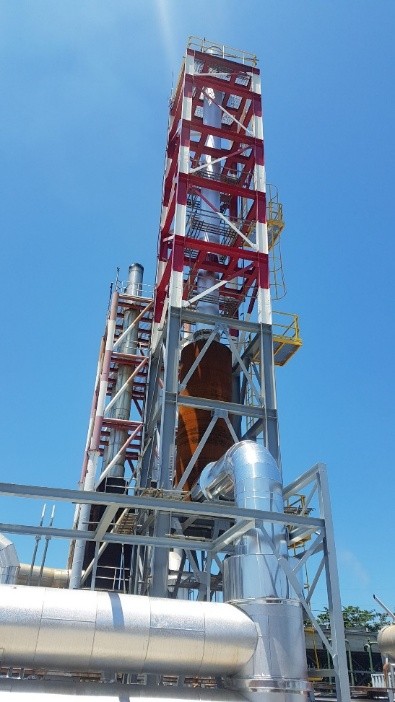
Source: https://pmmworks.com/our-projects/dmci-power-corp/
There are many critical plant structures containing sensitive goods and hazardous materials which need to be treated with extra care during the loading, containment, fire protection and vibration control phases of a project. Critical power structures require structural redundancy. This means that even a local failure will not result in a total failure of the overall system or even a shutdown of the entire power plant. To achieve this goal for the critical structures and their supports, they are designed with alternative load paths, with reserve capacity and with redundant back-up systems. All of this in order to realize high degrees of resilience, reliability and business continuity.
The structural arrangement of the plant should minimize conflicts between systems and comply with requirements for constructability, operations and maintenance access, and maintainability. For projects where Building Information Modeling (BIM) is used intensively before the construction start to coordinate structural elements with the mechanical, electrical, and piping (MEP) components, after the construction start, BIM can reduce field clashes, rework, and change orders, and even improve the project schedule.
5. SEISMIC AND WIND DESIGN CONSIDERATIONS
Compared to ordinary buildings, power plants are considered critical infrastructure facilities. They are typically designed to meet higher reliability standards.
Structural systems must remain stable during:
- Earthquakes
- Typhoons
- Blast loads
- Operational emergencies
Seismic design considerations may include:
- Ductile detailing
- Base shear resistance
- Equipment anchorage
- Pipe restraint systems
- Flexible utility connections
Earthquakes can cause significant damage to the main structure of power plants, but the risk of damage to equipment through loss of anchorage of non-structural items is much greater and can cause significant disruption and ultimately plant shut down.
The design of tall and slender structures requires particular consideration to be given to the effects of wind induced vibration and structural deflection. It is the aim of the structural engineer to design a structure that is not only safe but is also to be robust to withstand any failure of part of the plant and thus minimize any downtime required to rectify any defects. It is essential that all facilities are properly maintained in good working order to ensure long term operational capability.
In addition to ensuring the structural reliability of equipment anchorage in facilities for power plant facilities, these types of facilities have to fulfill a variety of other demands with respect to a wide scope of legal requirements, industry standards or other codes and building codes that have to be met. For designing the structural components of such type of facilities, generally the national provisions for buildings as well as the other provisions with respect to earthquakes, wind loads, fire protection, environmental issues etc. are considered. For the power generation industry, a number of design guidelines are in use within the different fields of business. The aim for meeting these provisions is to ensure the safety of the building’s structure as well as the safe operation of all facilities provided at such type of power plant facilities in order to avoid any damage to the environment, and to ensure reliable and long-term operation of such facilities.
6. CONSTRUCTABILITY AND MAINTENANCE ACCESS
A major factor in successful power plant projects is constructability. Structural systems should also be practical to build and maintain, aside from being safe and efficient.
Important constructability considerations include:
- Crane access during construction
- Equipment lifting and replacement paths
- Temporary construction loads
- Material delivery limitations
- Access platforms and walkways
- Future maintenance and clearances
Poor constructability planning can lead to:
- Delayed installation
- Rework during construction
- Congested work areas
- Unsafe lifting operations
- Increased project costs
Reviewing construction methodologies, sequencing, and access requirements during the design stage can greatly improve project coordination. Early contractor involvement is critical. It helps improve coordination, reduce construction risk, and optimize project execution.
CONCLUSION
Successful power plant projects require close coordination between multiple disciplines. Many structural issues arise from incomplete coordination during design. This includes pipe clashes with structural beams, insufficient maintenance access, inadequate equipment clearances, overloaded support structures, and conflicting embedment locations. These issues can be identified before construction through early coordination and BIM integration. This helps reduce variation of orders, delays, and costly field modifications.
In addition to having sufficient strength, the design of a power plant must also take account of the dynamic behavior of equipment, thermal expansion, constructability, earthquake resistance, safety, and maintainability. To prevent problems during the construction phase and to achieve a fixed project schedule, the early coordination of designers, contractors, equipment suppliers and consultants is crucial for safe and reliable operation and optimal operating performance in the long term.
The integration of structural aspects into a project from the start of the project life cycle enables project teams to reduce construction risks, to fix the project schedule in a secure way and to ensure reliable operation and the best long-term operating performance of the plant. Effective structural design is more than a purely technical task. It is a decisive factor for the success of complex industrial projects.
ABOUT THE AUTHOR
Christine Ave V. Tragura, MBA, CLSSYB
Ave is a licensed Civil Engineer with over 16 years of international engineering and infrastructure experience across the construction, oil and gas, mining, manufacturing, and energy sectors in the Philippines and Singapore. She is currently serving as Digital Communications Senior Supervisor at D.M. Consunji, Inc. (DMCI).
More News
August 14, 2026
Excellence in Action: DMCI's Successful 4th ISO Surveillance Audit
August 8, 2026
St. Luke’s Medical Center-QC New Hospital Building Project Achieves 3 Million Safe Manhours without a Lost Time Incident (LTI)
August 5, 2026
Engineering Lessons from DMCI's Experience in Diego Garcia
All News
Lessons From Diego Garcia: A Conversation with Engr. Ronaldo Elepaño Jr. August 18, 2026
Excellence in Action: DMCI's Successful 4th ISO Surveillance Audit August 14, 2026
St. Luke’s Medical Center-QC New Hospital Building Project Achieves 3 Million Safe Manhours without a Lost Time Incident (LTI) August 8, 2026
Engineering Lessons from DMCI's Experience in Diego Garcia August 5, 2026
Celebrating 5 Million Safe Manhours at the 88 MLD Las Piñas Water Reclamation Facility Project July 31, 2026
DMCI Mid-Year Planning: Reflecting on Performance, Strengthening the Path Forward July 25, 2026
Technical Insights Series Article 3 - Earthquake-Resistant Building Design in the Philippines July 13, 2026
DMCI Congratulates DLSU Laguna on Its LEED Silver Certification Milestone July 10, 2026
Amani Tower Project Achieves 1 Million Safe Manhours Without a Lost Time Incident (LTI) July 4, 2026
PHILCONSTRUCT 2026: Showcasing Leadership, Innovation, and Industry Collaboration July 3, 2026
De La Salle-College of Saint Benilde David M. Consunji Ideation Room Naming Ceremony July 1, 2026
DMCI Conducts Nationwide Simultaneous Earthquake Drill to Strengthen Emergency Preparedness June 18, 2026
Technical Insights Series Article 2 - How Megaprojects are Reshaping Philippine Infrastructure June 9, 2026
Technical Insights Series Article 1 - Structural Considerations When Designing a Power Plant May 28, 2026
DMCI Technical Insights Series May 28, 2026
La Salle Greenhills Senior High School, International Baccalaureate (IB), and Performing Arts Building Topping-Off Ceremony May 18, 2026
St. Luke’s Medical Center New Hospital Building Topping-Off Ceremony April 23, 2026
Bringing Government Services Close to Our Employees - Launching of SSS Offsite E-Center February 26, 2026
Enrique K. Razon Jr. Hall & University Hall - The country's first LEED Silver Certified Academic Buildings February 12, 2026
The new Pioneer Cold Storage is one step closer to completion! January 20, 2026
1st EHS Central Committee Meeting for 2026 January 12, 2026
Bridging the Skills Gap: Training the Next Generation of Builders November 24, 2025
DMCI is 13th GKK’s Regional Winner! October 16, 2024
DMCI successfully completes IMS recertification October 7, 2024
CIC inks P3.3-B deal with DMCI for C5 Link Segment 3B construction May 23, 2024
DMCI supports Hooked on Book (HOB) Library October 15, 2023
Continued Certification of DMCI’s Integrated Management System September 1, 2023
Continued Certification of DMCI’s Integrated Management System February 16, 2023
DMCI-Nishimatsu joint venture bags subway contract October 3, 2022
DMCI supports relief operations to typhoon-stricken areas January 9, 2022
DMCI on its way back to prepandemic profit level this year August 11, 2021
DMCI vaccinates over 4,000 employees July 9, 2021
From Ikea to Dagat-Dagatan: DMCI begins work on biggest wastewater facility March 19, 2021
Blessed Consunji Group pays it forward January 24, 2021
More than 5,000 youths to get skills training from USAID, PBEd; Aboitiz, DM Consunji to provide pre-employment support December 7, 2020
DMCI order book leaps 152% to P65.8 B in H1 August 14, 2020
Full blast construction of NLEX connector to start this year February 24, 2020
More firms eye bidding for Manila subway contracts February 24, 2020
MRP Foundation-funded PSG Station Hospital topped off February 24, 2020
DMCI Works Double Time on Infra Projects September 3, 2019
First dedicated OFW hospital, diagnostic center begins construction in Pampanga February 20, 2020
Ceremonial Track-laying for LRT Line 2- East Extension Project Package 3 April 16, 2019
Republic of the Philippines Award for Manila LRT Line 2- East Extension Project March 5, 2019