
News and Announcements
News & Announcements
Technical Insights Series Article 2 - How Megaprojects are Reshaping Philippine Infrastructure
BUILDING THE FUTURE THROUGH LARGE-SCALE DEVELOPMENT
The Philippines is on the threshold of a revolution fueled by massive and groundbreaking infrastructure projects. Currently projects are being implemented by the government and the private sector to enhance the lives of the Filipino people and to develop the country’s vast urban potential through innovative engineering designs, methods and best practices and drive the construction industry to greater heights.
But despite the growing demand for quality and efficient infrastructure brought about by the country’s urbanization, the problems of traffic, overpopulation, flooding, and lack of public transportation in Metro Manila and other neighboring provinces continue to hound the country. These problems can be addressed through large-scale infrastructure development by the government and the private sector to improve connectivity and drive economic growth in the long run.
Megaprojects are no longer just about engineering and building new roads and bridges. Many of the projects under development are now being complemented by large-scale sustainable buildings such as high-rise offices, integrated large-scale townships, transit-oriented developments, structures for flood management, renewable energy facilities, and sophisticated new transportation systems that are transforming engineering practices and the construction industry as a whole.
THE RISE OF INFRASTRUCTURE MEGAPROJECTS IN THE PHILIPPINES
Several flagship infrastructure projects have significantly contributed to national development in recent years. The continuous prioritization of transportation, flood mitigation, airport modernization, and regional connectivity is made possible by programs such as “Build Better More”.
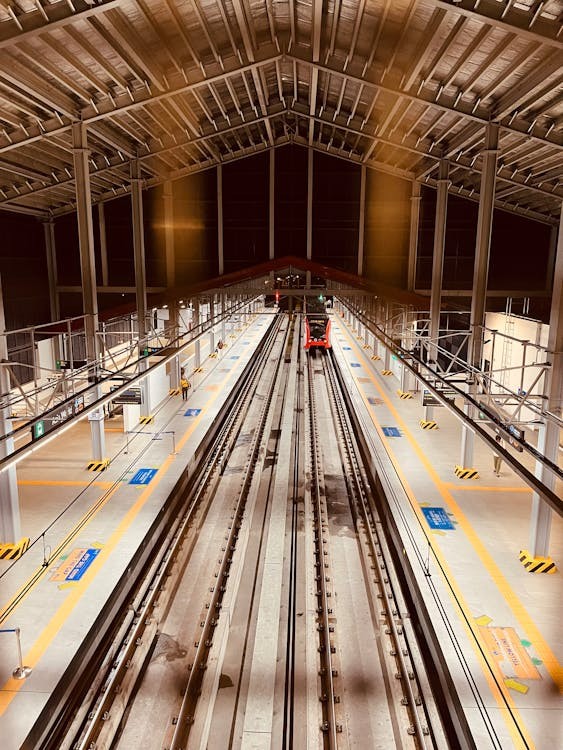
Examples of infrastructures constructed by DMCI:
- Metro Manila Subway Project
- North-South Commuter Railway
- Cebu-Cordova Link Expressway (CCLEX)
- LRT extensions
- Major airport expansion projects
- Large mixed-use commercial developments in Metro Manila
Objectives of these projects include:
- Improving mobility
- Reducing travel time
- Creating jobs
- Attracting investments
- Decentralizing economic growth away from overcrowded urban centers
With the expectation to reduce dependence on private vehicles and improve daily commuting conditions for millions of Filipinos, railway expansion projects are built. New expressways and bridges have enabled access to other parts of the country especially in the growing areas outside Metro Manila for business.
Additionally, the private sector is driving development by building a new generation of cutting-edge green offices, sustainable residential communities, shopping centers, and other commercial facilities that are environmentally sustainable, resilient, and smart. As such, these buildings require the close collaboration of architects, engineers, consultants and the contractors who build them, and on many occasions are of a complex structural and construction nature, requiring close collaboration with the client.
ENGINEERING CHALLENGES BEHIND MEGAPROJECTS
Infrastructure megaprojects involve significant technical and operational challenges. That is despite their benefits. Extensive planning, coordination, risk management, and financial control are required. This is essential in large-scale developments. If not properly addressed early in the project lifecycle, delays, design conflicts, and unforeseen site conditions can lead to costly variations and schedule impacts.
The Philippines’ geographic and environmental condition is one major challenge in the country. The projects must be designed to withstand earthquakes, typhoons, flooding, and varying soil conditions. The application of advanced engineering analysis, resilient design principles, and efficient construction methodologies requires a more sophisticated level of engineering expertise from both the design team and the contractors involved in the project.
The majority of megaprojects are developed through a network of stakeholders delivering a single integrated design requirement. The project will be operating in an efficient manner when the structural, architectural, mechanical, electrical, plumbing, and fire protection elements have been integrated with sustainability requirements. A number of projects have encountered conflicts between the different elements of the development, and have suffered delays and increased costs, as a result of the ineffective operation of the development requiring all of the stakeholders to work effectively together. Many projects are operating on a more collaborative basis by utilizing Early Contractor Involvement (ECI), Building Information Modelling (BIM) and integrated project coordination.
THE IMPORTANCE OF EARLY CONTRACTOR INVOLVEMENT (ECI)
Early Contractor Involvement (ECI) is one of the evolving practices in Philippine construction. Contractors participate during the design stage rather than waiting until construction begins, under this approach. Practical insights regarding constructability, methodology, cost optimization, scheduling, and risk management are provided by contractors.
To identify design conflicts early, improve coordination between disciplines, and reduce potential variation orders during construction, project teams adopt ECI. More efficient engineering solutions that maintain quality while improving cost and schedule performance are also recommended by contractors.
This approach is valuable in major office and commercial developments. This is because coordination among multiple building systems is highly critical. The project team can better align architectural intent with actual construction feasibility by involving the contractor early.
ECI benefits include:
- Improved constructability during design
- Better cost control and budget alignment
- Reduced construction delays and redesigns
- Faster coordination among consultants and contractors
- Early identification of technical conflicts
- More efficient scheduling and procurement planning
This process is also supported by the growing adoption of BIM technology. Project teams can visualize potential conflicts before construction starts through 3D modelling and clash detection. This minimizes costly field revisions.
SUSTAINABILITY AND RESILIENCY IN MODERN INFRASTRUCTURE
The Philippines is increasingly focused on sustainability and resiliency. This is especially true in modern megaprojects. Green building standards, energy-efficient systems, and environmentally responsible construction practices are incorporated by developers and contractors in their projects.
LEED and WELL certifications are now the target of many commercial developments, to promote healthier, energy-efficient, and environmentally sustainable buildings. Flood mitigation systems, disaster-resilient structural designs, and renewable energy components are also integrated in infrastructure projects.
Due to the Philippines’ vulnerability to natural disasters, resiliency has become especially important. Infrastructure must also remain operational during extreme environmental events, not only focused to function efficiently.
Sustainable infrastructure strategies include:
- Energy-efficient facade systems
- Rainwater harvesting systems
- Solar power integration
- Smart building automation
- Sustainable material selection
- Improved drainage and flood management systems
A more adaptable, efficient, and future-ready infrastructure is created. It is possible with the help of these innovations.
ECONOMIC AND SOCIAL IMPACT
Infrastructure megaprojects create long-term economic and social benefits. These benefits extend far beyond engineering and construction. In surrounding areas, they:
- Generate employment opportunities
- Stimulate local businesses
- Improve transportation efficiency
- Increase property values
Regional development is encouraged with improved connectivity. Areas previously considered inaccessible become attractive. They turn into suitable locations for investment, residential communities, and industrial expansion.
Also, quality of life improves with better infrastructure. Communities benefit and national productivity is supported directly by the following: reduced travel time, safer transportation systems, more reliable utilities, and improved public facilities.
The local construction industry’s growth is parallel to the country’s development of its infrastructure. The industry is evolving as more construction projects are being developed with the latest technology. Designers are working hand in hand with the builders to produce better results and new ways of delivering projects are being introduced.
CONCLUSION
Many of the large infrastructure megaprojects currently under construction and being planned for implementation in the Philippines will hopefully help develop the country’s economy and improve the lives of Filipinos on a daily basis through a network of transportation systems, large commercial development projects, and key urban infrastructure all designed to be able to withstand natural disasters.
Sustaining these projects requires more than just funding and planning. These projects require coordination, early collaboration, state-of-the-art engineering, and sustainable design.
To ensure the delivery of successful and sustainable infrastructure megaprojects in the long run, adoption of innovative construction approaches such as Early Contractor Involvement and Building Information Modeling will be crucial as the country continues to pursue a vigorous program of infrastructure modernization. These key projects are shaping up to help build a more connected, more resilient, and more progressive nation for the Filipino people now and in the future.
ABOUT THE AUTHOR
Christine Ave V. Tragura, MBA, CLSSYB
Ave is a licensed Civil Engineer with over 16 years of international engineering and infrastructure experience across the construction, oil and gas, mining, manufacturing, and energy sectors in the Philippines and Singapore. She is currently serving as Digital Communications Senior Supervisor at D.M. Consunji, Inc. (DMCI).
More News
August 14, 2026
Excellence in Action: DMCI's Successful 4th ISO Surveillance Audit
August 8, 2026
St. Luke’s Medical Center-QC New Hospital Building Project Achieves 3 Million Safe Manhours without a Lost Time Incident (LTI)
August 5, 2026
Engineering Lessons from DMCI's Experience in Diego Garcia
All News
Lessons From Diego Garcia: A Conversation with Engr. Ronaldo Elepaño Jr. August 18, 2026
Excellence in Action: DMCI's Successful 4th ISO Surveillance Audit August 14, 2026
St. Luke’s Medical Center-QC New Hospital Building Project Achieves 3 Million Safe Manhours without a Lost Time Incident (LTI) August 8, 2026
Engineering Lessons from DMCI's Experience in Diego Garcia August 5, 2026
Celebrating 5 Million Safe Manhours at the 88 MLD Las Piñas Water Reclamation Facility Project July 31, 2026
DMCI Mid-Year Planning: Reflecting on Performance, Strengthening the Path Forward July 25, 2026
Technical Insights Series Article 3 - Earthquake-Resistant Building Design in the Philippines July 13, 2026
DMCI Congratulates DLSU Laguna on Its LEED Silver Certification Milestone July 10, 2026
Amani Tower Project Achieves 1 Million Safe Manhours Without a Lost Time Incident (LTI) July 4, 2026
PHILCONSTRUCT 2026: Showcasing Leadership, Innovation, and Industry Collaboration July 3, 2026
De La Salle-College of Saint Benilde David M. Consunji Ideation Room Naming Ceremony July 1, 2026
DMCI Conducts Nationwide Simultaneous Earthquake Drill to Strengthen Emergency Preparedness June 18, 2026
Technical Insights Series Article 2 - How Megaprojects are Reshaping Philippine Infrastructure June 9, 2026
Technical Insights Series Article 1 - Structural Considerations When Designing a Power Plant May 28, 2026
DMCI Technical Insights Series May 28, 2026
La Salle Greenhills Senior High School, International Baccalaureate (IB), and Performing Arts Building Topping-Off Ceremony May 18, 2026
St. Luke’s Medical Center New Hospital Building Topping-Off Ceremony April 23, 2026
Bringing Government Services Close to Our Employees - Launching of SSS Offsite E-Center February 26, 2026
Enrique K. Razon Jr. Hall & University Hall - The country's first LEED Silver Certified Academic Buildings February 12, 2026
The new Pioneer Cold Storage is one step closer to completion! January 20, 2026
1st EHS Central Committee Meeting for 2026 January 12, 2026
Bridging the Skills Gap: Training the Next Generation of Builders November 24, 2025
DMCI is 13th GKK’s Regional Winner! October 16, 2024
DMCI successfully completes IMS recertification October 7, 2024
CIC inks P3.3-B deal with DMCI for C5 Link Segment 3B construction May 23, 2024
DMCI supports Hooked on Book (HOB) Library October 15, 2023
Continued Certification of DMCI’s Integrated Management System September 1, 2023
Continued Certification of DMCI’s Integrated Management System February 16, 2023
DMCI-Nishimatsu joint venture bags subway contract October 3, 2022
DMCI supports relief operations to typhoon-stricken areas January 9, 2022
DMCI on its way back to prepandemic profit level this year August 11, 2021
DMCI vaccinates over 4,000 employees July 9, 2021
From Ikea to Dagat-Dagatan: DMCI begins work on biggest wastewater facility March 19, 2021
Blessed Consunji Group pays it forward January 24, 2021
More than 5,000 youths to get skills training from USAID, PBEd; Aboitiz, DM Consunji to provide pre-employment support December 7, 2020
DMCI order book leaps 152% to P65.8 B in H1 August 14, 2020
Full blast construction of NLEX connector to start this year February 24, 2020
More firms eye bidding for Manila subway contracts February 24, 2020
MRP Foundation-funded PSG Station Hospital topped off February 24, 2020
DMCI Works Double Time on Infra Projects September 3, 2019
First dedicated OFW hospital, diagnostic center begins construction in Pampanga February 20, 2020
Ceremonial Track-laying for LRT Line 2- East Extension Project Package 3 April 16, 2019
Republic of the Philippines Award for Manila LRT Line 2- East Extension Project March 5, 2019